
Business Process Outsourcing (BPO): The 2025 Guide


Many companies reach a point where local hiring cannot keep up with product development. An offshore development hub offers a way to expand engineering capacity without slowing growth.
However, building an ODC requires more than simply hiring developers abroad. The ODC market is expected to grow rapidly from $24.5 billion in 2025 to $47.3 billion in 2033 with a CAGR of 14%. This guide explains how the model works, when to use it, and what companies should consider before launching and scaling an offshore development unit in 2026.
You’ve probably heard that ODC combines access to skilled tech experts with cost-efficiency. But what else does it include, and how does it differ from other collaboration models? Let’s explore the essentials.
An offshore software development center is a dedicated dev team based in another country. Businesses typically establish ODCs through a provider, hiring tech experts who work full-time on the company’s software projects. Remote developers integrate into your workflows, development standards, and internal culture, operating as a part of your in-house team.
The ODC model often assumes long-term collaboration with a local company that provides workspace, infrastructure, and administrative support for the programmers you hire. It becomes your local representative office, handling all operational and compliance tasks.
While both setups mean teaming up with an offshore provider, they work in pretty different ways. Here’s what sets them apart.
| Criterion | Offshore Development Center (ODC) | Offshore Development Company |
| Team Model | You get a team of dedicated tech experts | A vendor puts together a team just to handle your project |
| Engagement Type | Long-term collaboration, where developers become an extension of your in-house team | Project-based work or time-bound work with a predefined scope |
| Delivery Ownership | You own the roadmap, priorities, and quality | A vendor owns execution, delivery, and the final results |
| Operational Responsibility | The provider handles payroll, infrastructure, HR, and legal compliance | The vendor owns and manages operations internally |
| Knowledge Retention | Engineers build deep product knowledge; you manage the work | Knowledge is tied to the project and often lost after delivery |
| Cost Structure | Transparent monthly cost per engineer + service fee | Fixed price, time and material (T&M), or milestone-based pricing |
An ODC is a team setup model in which you get off-site dedicated developers, designers, QA specialists, and DevOps engineers, and fully control their work. Here, you pay for the people.
With an offshore development company, you purchase offshore development services and get a finished digital product. The vendor selects and manages the team for delivering an application, platform, or product component.
You’ll find 3 ways to set up an ODC:
Outsourcing means contracting an offshore development company, which we described above. So the core difference between these two models is who owns and manages the team.
While an ODC becomes a remote branch of your company, outsourcing involves delegating development tasks to offshore development companies.
With the big picture in place, let’s explore the details of the most common offshore development center model and learn what exactly you get when partnering with an offshore development center services provider.
The backbone of an ODC is a team of developers hired specifically for the company’s current needs and goals. Skilled recruiters select tech professionals based on your preferred tech stack, project requirements, and the product roadmap. Once hired, dedicated software engineers follow your coding standards and workflows. They stay closely integrated with your in-house team, working as an extension of it.
A local company offers not only tech expert hiring, but it also handles the physical and technical infrastructure for a client’s team. This includes office space arrangement, equipment procurement, and secure network configuration. Providers can also implement VPN access, encrypt devices, configure access permissions, and monitor development environments to protect clients’ intellectual property.
In contrast to hiring individual experts for project-based tasks, an ODC partner builds a dedicated tech team for a long-term partnership. These teams combine all key roles required for your product development. Typically, they include programmers, QA engineers, DevOps specialists, and tech leads. Working together on the same product, they gain deep knowledge of it. It helps them contribute effectively across different stages of the product lifecycle.
An IT team based abroad acts as a stable engineering unit that delivers offshore software development service. Tech experts work on your product full-time and remain involved in the long term. The provider handles administrative tasks and supports talent retention to ensure your team works smoothly. High engagement and team stability make an ODC team a reliable engineering resource for years.
In 2026, cost savings are still the top reason companies turn to offshore development. For instance, senior engineers in Ukraine earn considerably less than those in Switzerland, the US, or Western Europe. And that’s driven not by lower expertise, but by local salary norms, tax structures, and cost-of-living differences.
While cost is a big draw, it’s just the start, as offshore development opens up a whole range of benefits that can really supercharge how companies create products.
In offshore regions, top-tier tech experts earn 30–50% less than in the US and Western Europe. That’s because the cost of living in Eastern Europe, India, parts of Latin America, or Southeast Asia is significantly lower. At the same time, developers in these destinations have strong technical expertise. This way, companies don’t compromise quality.
Businesses have to compete for qualified IT specialists in the local markets. Finding the right engineer, designer, or DevOps can take months and delay product development. With ODCs, companies access a 28M+ pool ot tech experts and tap into regions where these professionals are available. And due to providers’ tech recruiting expertise, organizations can build dedicated teams in weeks rather than months.
Full-time employment in the United States, Germany, France, Switzerland, and other Western European countries can take 2-3 months. That’s because of competition for talent, multiple interview rounds, notice periods, strict regulations, and more. With an offshore development center services provider, you can build an entire tech team in just 3–6 weeks.
When working with offshore development companies, you face typical challenges like limited process visibility and vendor-driven decisions. An offshore software development center gives full execution control, allowing you to define the product roadmap, manage processes, and take ownership of project outcomes. This model helps businesses align their development efforts with business goals.
Collaboration with dedicated offshore development center providers allows businesses to maintain a stable development process. Engineers retain product knowledge and actively contribute to planning, development, testing, and maintenance. Provider’s effective retention efforts reduce team turnover, helping you maintain steady development capacity and control operational costs.
As the project evolves, companies require additional tech specialists to develop new modules, update integrations, optimize algorithms, and support additional functionality. And with IT recruiters assisting an offshore delivery center, entities can onboard competent developers within a few weeks. Such flexibility allows organizations to grow without overloading their teams or slowing development.
Instead of relying on the often unstable and costly local market of IT experts, businesses can establish engineering hubs in offshore regions. This strategic move can help company founders and owners transform a development unit into an R&D center. It will support long-term innovation and build advanced solutions over time.
Before we jump to the advantages of an ODC, let’s check a few operational challenges this cooperation format may pose.
In many offshore setups, engineers are far from the product vision, business context, and decision-making. This leads to a “just tell me what to do” mindset, where developers aren’t truly engaged with the product. Mature ODC providers fix this issue by embedding offshore teams right into your roadmap and sharing business context, not just tasks.
For instance, Mobilunity brings your offshore tech experts into planning sessions, architecture discussions, and retrospectives. That way, they understand user needs, make proactive decisions, and contribute like product team members rather than just executors.
Even between skilled, industry-savvy tech experts, distributed collaboration can slow down decision-making. Different cultures and communication styles impact how developers interpret and share information. Small issues not addressed in time can become problems.
ODCs address this challenge through clear collaboration routines such as regular check-ins, shared platforms, and transparent communication. Documented development processes also help team members support knowledge flow and keep development progress.
Coordinating daily tasks and scheduling meetings requires additional planning for distributed teams. Limited overlap in business hours can delay response cycles, reduce developers’ productivity, and affect issue resolution.
ODC partners help companies address this complication by scheduling stand-ups, sprint reviews, and planning sessions during the overlapping hours. They also implement asynchronous communication tools and documentation practices. This ensures that development continues even when some team members aren’t available.
In offshore destinations, competition for qualified developers is sometimes significant. Even when specialists are hired, there’s a risk that they may leave the project. Team turnover slows the development process and increases onboarding costs.
To minimize these risks, providers monitor local markets and apply best practices to identify the best-fit experts. They assist with onboarding, run regular feedback sessions, and implement incentive programs to keep engineers engaged and motivated.
Remote teams require secure networks and configured coding environments to ensure a consistent development process. Without strong protection, businesses compromise their sensitive data and intellectual property.
In an offshore software development center, you’ll need to implement VPN access, role-based permissions, and encrypted devices. Reputable providers offer support in establishing a secure environment to ensure the efficient work of offshore teams.
Cultural fit remains one of the most underestimated factors in an ODC’s success. Western companies, for instance, often encourage honest communication and active discussions regardless of seniority. In some cultures, developers are used to more formal, hierarchical interactions. This difference affects the sharing of ideas or the raising of concerns within distributed squads.
From our experience working with teams across multiple countries, Eastern Europe consistently stands out, offering the closest fit to Western product development practices.
Providers address cultural gaps by assisting with onboarding on both sides. They create communication routines that encourage engineers to share updates and clarify issues. They can also recommend appointing local tech leads who coordinate communication between the team and the client.
In teams, where developers work in different time zones and environments, performance visibility becomes an issue. Different workflows, reporting practices, and communication habits can also impact work coordination.
ODCs overcome this complication by incorporating collaboration tools like Jira, Git-based platforms, or Azure DevOps. This helps both sides track code activity and task progress. Providers also encourage the establishment of structured workflows, such as stand-ups, sprint planning, and progress reviews.
Despite these operational challenges, establishing a dedicated offshore development center remains a practical way to expand development capacity.
Building an effective ODC offshore development center in 2026 requires more than assembling a team in another country. It blends distributed engineering talent with AI‑enhanced workflows to create a scalable, high‑performance delivery model.
Let’s walk through the key steps in this process.
At this stage, you need to clarify your product scope and developers’ responsibilities. In 2026, this step isn’t just about listing features, but understanding which parts of the delivery pipeline require human ownership and which can be automated, accelerated, or delegated to AI systems.
For instance, a SaaS company expanding its analytics platform needs backend engineers, a DevOps specialist, and QA support.
But AI can now handle large portions of data transformation, test generation, and integration scaffolding. That means the offshore team you assemble will be smaller, more senior, and focused on the high‑impact components that AI can’t automate reliably.
If you skip this step, you risk misallocating responsibilities between in‑house and offshore teams. Developers may duplicate work, wait for decisions, or spend time on tasks that should have been automated from day one.
Clear product objectives, paired with a realistic view of AI’s role, give you the foundation to structure your ODC correctly, define ownership boundaries, and hire only the talent you need.
An advisor helps you avoid the most expensive mistake companies still make in 2026: assembling a team before understanding what the product truly requires.
A strong consultant evaluates your goals, identifies which responsibilities should remain in‑house, and determines where AI can replace manual engineering effort. Instead of hiring a large team by default, they design a lean, high‑impact structure and define clear ownership boundaries between onshore and offshore contributors.
An advisor also maps out your feature development cycle, recommends the right seniority mix, and guides you toward locations that match your technical and budget expectations. Their input ensures your ODC setup aligns with long‑term delivery needs rather than short‑term capacity gaps.
Selecting the right location starts with understanding whether the region can support the type of team you plan to build. That means assessing the depth of the talent pool, the seniority distribution, compensation expectations, hiring timelines, and the local market’s competitiveness for the skills you need.
In 2026, this also includes evaluating the region’s maturity in AI‑assisted development practices, since your team’s productivity will depend on it.
But talent availability is only one element in the broader picture. You also need to consider the country’s technology ecosystem, economic stability, legal environment, and how easily your teams can collaborate across different cultures and communication styles.
The right location of your ODC shortens recruitment cycles, improves day‑to‑day coordination, and gives your center room to scale without friction. Taking the time to compare markets now prevents operational issues later and sets your offshore unit up for long‑term success.
Companies generally have four ways to collaborate with offshore developers:
In this section, we focus on the last two options, as they form the foundation for building an Offshore Development Center.
With the third approach, a company establishes an independent ODC by setting up a legal entity in the target country. It manages recruitment, HR, and infrastructure directly. This offshore development center model provides complete operational oversight. However, it also requires understanding local regulations, securing office infrastructure, and maintaining ongoing administrative operations. These commitments can slow down initial setup and increase long‑term costs.
Collaborating with a local dedicated development team provider offers a faster and safer route. The vendor-supported ODC is simpler to manage, particularly for companies entering a new market. Your partner handles major operational responsibilities, including talent acquisition, workspace arrangements, payroll processing, legal compliance, and day-to-day support.
As a result, establishing your own ODC works best for larger companies that require direct authority over recruitment, personnel management, and operational processes. Engaging with a service provider suits businesses that want to accelerate setup and avoid complex administrative responsibilities.
This phase establishes a solid legal foundation and provides the team with a secure, well-equipped workspace. If you’re creating your own ODC, you’ll need to register your business entity, establish accounting systems, and make sure you comply with employment, tax, and data-protection regulations. These activities form the administrative core that allows your team to operate without interruptions.
If you’re working with a service provider, it handles these responsibilities for you. They include office facilities, necessary equipment, secure connections to your internal systems, and collaboration and communication tools. It also ensures that data security, regulatory compliance, and intellectual property protections are in place for cross‑border work.
Having a clear legal framework and robust infrastructure lays the groundwork for all future activities of your dedicated offshore development center.
Hiring begins with defining the exact skills, seniority levels, and responsibilities your offshore team will own. The goal is to assemble engineers who understand your product direction, communicate clearly, and can operate effectively within a distributed delivery model.
Candidates typically go through technical assessments and structured interviews to validate their engineering capabilities, problem‑solving approach, and ability to collaborate across time zones.
By establishing your own dedicated offshore development center, you manage the entire recruitment cycle. This gives you full control but requires significant time and operational effort.
When partnering with a service provider, this company covers most of the recruitment workload. Your involvement usually focuses on the technical and cultural fit interviews to ensure the selected engineers align with your standards and integrate smoothly with your existing team.
Clear communication and predictable delivery routines keep a distributed team aligned and productive. Your offshore unit needs a defined workflow that outlines how work moves from planning to development, testing, and release, and who owns each stage. This prevents delays, reduces rework, and ensures both teams operate from the same workflow structure.
Most ODCs rely on structured routines such as sprint planning, daily syncs, backlog refinement, and regular release checkpoints to maintain consistent delivery. Choosing the right collaboration stack for messaging, video calls, task tracking, and documentation is equally important, as these tools become the backbone of day‑to‑day coordination.
Strong communication habits keep your offshore and in‑house teams synchronized, reduce friction across time zones, and create a delivery rhythm that supports consistent, high‑quality output.
As your product evolves, your offshore development center should grow in a controlled, strategic way. Growth may involve bringing in additional developers, introducing roles like QA, DevOps, or product management, or forming multiple cross‑functional squads as your roadmap expands. However, scaling no longer means simply adding more engineers. It means expanding the capabilities of a lean, AI‑supported team while preserving delivery quality and communication standards.
Companies usually follow the same hiring standards used when building the initial team of dedicated offshore developers. This helps keep the consistency in their skills, seniority, and cultural fit. As a result, the offshore center expands while maintaining stable release cycles, clear responsibilities, and well-established development processes.With these steps in place, a company can build a well‑structured, dedicated offshore development center that becomes a reliable extension of its engineering team over the long term.
When selecting between setting up the ODC and building a dev team in-house, companies consider their business priorities and operational considerations. Some want to launch features quickly, while others prefer to keep product knowledge inside the organization.
Here are the key factors that tech leaders consider when choosing a model that fits their development strategy.
Due to lower living costs in offshore destinations, developers’ salaries in those regions are significantly lower than in the US and Western Europe. With recruitment, infrastructure, and operational expenses optimized, an offshore development center services provider can hire offshore tech experts with 30–50% lower costs. At the same time, you get access to highly skilled engineering talent.
In American and Western European markets, developers are in high demand. Together with lengthy in-house employment procedures, hiring niche experts can take months in these countries. Offshore software development service providers, in contrast, work in less competitive markets and have established recruiting processes.
Strong tech hiring experience and a structured approach allow providers to find, assess, and bring highly relevant candidates to you within 3–6 weeks.
When expanding in-house teams, you’ll face longer hiring cycles and greater administrative burden than when engaging developers through offshore staffing partners.
The ODC providing companies already maintain candidate databases and stay connected with local tech talent and communities. They can start hiring immediately. Also, ODCs have operational infrastructure in place to quickly onboard newcomers.
In both models, the company owns 100% development control; the difference lies only in who runs the operations.
Your provider contracts developers directly, covering legal, accounting, HR, and administrative assistance. For companies that operate under strict security and compliance rules, building in-house teams may align better with the corporate requirements.
Both ODCs and in-house teams can effectively support long-term development needs and product growth. The right model will depend on how you want to balance the costs, hiring speed, scalability, and management structure.
Artificial intelligence transforms the entire software development industry, and offshore development centers are part of this shift. 57% of 1,000 companies that participated in the Offshore Software Development Market Overview, updated in 2026, invested in AI-powered automation to improve the efficiency of their offshore software development. AI tools impact how distributed engineering teams write code, test software, and coordinate development work.
From our experience setting up offshore engineering teams for global companies, we’ve spotted a gap between what most organizations expect and what modern ODCs deliver. Many still see offshore development as a quick, cost-effective way to fill tech roles. But today’s teams rely on mature engineering practices, efficient automation, and deep domain expertise. Offshore teams now take part in architectural planning, product decision-making, and continuous innovation, not just getting tasks done.
In our remote teams, we expect a 2X productivity boost, 40–60% cost savings, and <5% bug rates from AI tools. However, we actually see 1.7–2.5X gains from code generation, 30-50% lower costs from AI efficiencies, and 2–4% bug rates from automated AI testing.
Below are the main areas of offshore dev teams’ work that AI influences in 2026:
The 14th installment of Deloitte’s Global Business Services Survey reports that over the next 3 years, respondents will continue to focus on developing next-gen capabilities and accelerating the digital agenda, from 21% in 2025 to 49% in 2028.
Engineers use coding assistants to analyze large codebases, highlight potential issues during code review, and suggest improvements. They also help generate documentation, summarize pull requests, and explain complex parts of the code to new developers during onboarding.
This way, AI-enhanced offshore teams maintain code quality and deliver work faster, while engineers focus on architecture and complex technical tasks. Consequently, software engineers spend less time on routine implementation tasks.
Coding copilots help ODC software engineers complete everyday development tasks more quickly and consistently. Tools such as TabNine, GitHub Copilot, and Amazon CodeWhisperer assist developers directly in their coding environments. They can suggest code snippets, generate boilerplate functions, create test cases, and help refactor existing code.
In offshore development teams, AI copilots also help maintain consistent coding standards and reduce time spent on routine implementation work.
Tech teams increasingly rely on AI-powered systems to analyze development data and track project progress. These tools help PMs review task completion patterns, detect delays, and identify areas where development slows down.
AI-driven systems can analyze team activity in code repositories, PM tools, and issue trackers. With AI tools, project leaders can monitor progress, spot potential risks, and adjust priorities, keeping development aligned with product goals.
According to the 2025 Stack Overflow Developer Survey, 84% of developers used or planned to use AI-powered tools for development. So, as AI-supported development becomes common, offshore teams that don’t use these tools fall behind:
Here are just a few things we’ve seen in real projects:
Here’s how engineers use AI in their daily work:
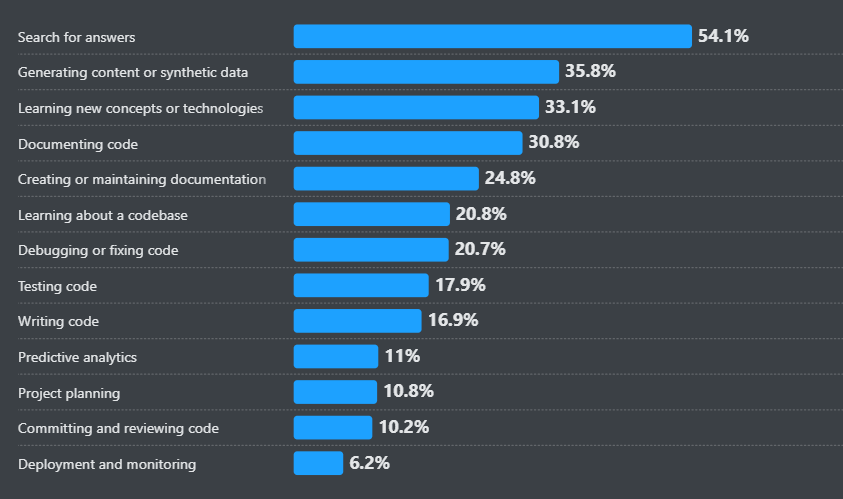
For offshore development centers, adopting AI tools becomes a practical requirement rather than a tech trend. Teams that integrate AI into everyday work can release features faster, maintain code quality, and keep up with modern software development practices.
As an ODC provider with 15+ years in the market, we’ve seen how distributed development teams succeed and where common challenges arise. The following recommendations reflect practical lessons from our real ODC partnerships.
Clearly defined responsibilities ensure each squad maintains a specific part of the product. Otherwise, the following risks arise:
Clear responsibilities help onshore and offshore teams collaborate more effectively and maintain steady development progress.
Metrics help PMs monitor development progress and identify bottlenecks and process issues. Here are three metrics widely used in development teams:
Some teams also monitor deployment frequency, bug resolution time, code review turnaround time, and other indicators. They allow project managers to monitor release pace, delays in issue fixing, and keep code reviews efficient.
Leaders often schedule real-time discussions for distributed teams to:
Our experiences prove that too many meetings interrupt developers’ work rather than improve coordination. Instead, you can try to:
This way, structured asynchronous collaboration reduces excessive meetings but keeps team members on the same page.
Without a shared engineering approach, distributed teams become misaligned. This can result in hard-to-maintain codebases, inconsistent tech decisions, low developer engagement, and slower onboarding.
Here’s what we recommend:
When both teams follow shared standards, workflows, and communication practices, they support steady product development.
Another critical point we’d like to share is how you can scale teams successfully and avoid common growth mistakes, such as:
Here’s how our clients approached these challenges:
When startups scale carefully, they can expand engineering teams while keeping product development stable.
We’ve gathered the key practical factors that will guide companies in building a dedicated development center.
Identify the main product components, upcoming features, and technical improvements planned for the near future. Without priorities, companies may hire developers without a clear direction, which can slow development and make team coordination harder.
Estimate not only developer salaries but also recruitment costs, operational expenses, and infrastructure requirements. This financial planning helps leaders understand the total cost of building and maintaining an offshore dedicated development team.
A balanced team ensures that development, testing, and deployment tasks are properly covered. Clear team structure also helps recruiters focus on the right profiles and accelerate the hiring process.
Set rules for system access, data protection, and secure development environments. Establishing these requirements early allows providers to configure VPN access, role-based permissions, and device security measures.
Choose collaboration tools, set expectations for status updates, and decide when meetings are necessary. When these routines are set early, both onshore and offshore engineers stay aligned on priorities and development progress.
Identify required technologies, seniority levels, and the order in which roles will be added to the team. It helps recruiters focus on the most critical positions first and scale the offshore team gradually as product development needs grow.
Deciding how your PM will assign tasks, track progress, and make technical decisions. A transparent delivery model helps teams coordinate development work and maintain predictable release cycles.
Choosing the right location is important when building an offshore development center, since talent availability, costs, culture, and tech ecosystems vary across regions.
Below are the most popular destinations to consider, along with the average annual salaries for full‑stack developers across key global tech hubs.
| Country | Average Annual Salary of a Full Stack Developer |
| US | $138,000 |
| Germany | $75,000 |
| Ukraine | $34,000 |
| Mexico | $29,000 |
| Vietnam | $25,000 |
| India | $14,000 |
Source: Stack Overflow, Djinni, Salary Expert, Glassdoor
Eastern Europe remains one of the most established regions for offshore development centers. Countries such as Poland, Ukraine, Romania, and Bulgaria offer strong engineering talent, particularly in backend development, cloud infrastructure, and enterprise software.
Many companies choose Eastern Europe because it has a 0–1 hour time zone overlap with Western Europe and up to 5 hours with North America. Developer salaries are also lower than in Western markets, while engineers have high technical expertise.
India is one of the largest destinations for offshore development centers. The country has a strong supply of software engineers and a well-developed IT services industry. However, the time zone difference between Europe and North America can affect real-time collaboration.
India’s large talent market enables businesses to hire engineers across a range of technologies, including cloud platforms, enterprise software, and data engineering. This country also offers competitive salary levels compared with Western markets.
Latin America has become a popular location for nearshore development centers, especially for companies in North America. Countries such as Mexico, Colombia, Argentina, and Brazil boast expanding technology ecosystems along with a growing pool of software engineering talent.
One of the main advantages of the region is time zone alignment with the United States. Many developers in Latin America also have strong proficiency in English. While salary levels vary by country, development costs are often lower than in the United States.
Southeast Asia is becoming an attractive region for offshore development centers. Countries such as Vietnam, the Philippines, and Indonesia are developing strong technology sectors and expanding their pools of software engineers.
Although time zone differences can affect collaboration with Western companies, Southeast Asia remains a competitive destination for businesses seeking scalable offshore engineering teams.
Choosing the right region for an offshore development center in 2026 depends on your priorities. Eastern Europe offers strong technical expertise and cultural alignment; India brings a large talent pool; Latin America excels in nearshore collaboration; and Southeast Asia continues to grow as a competitive talent hub.
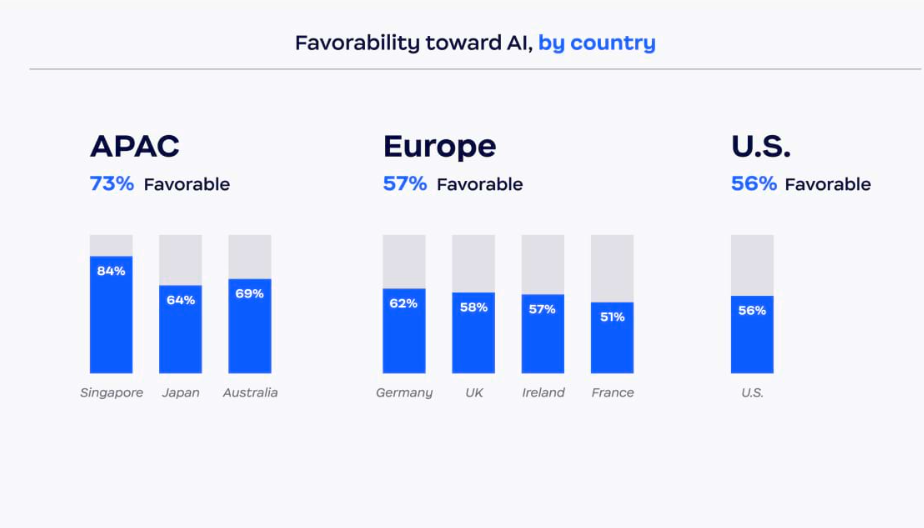
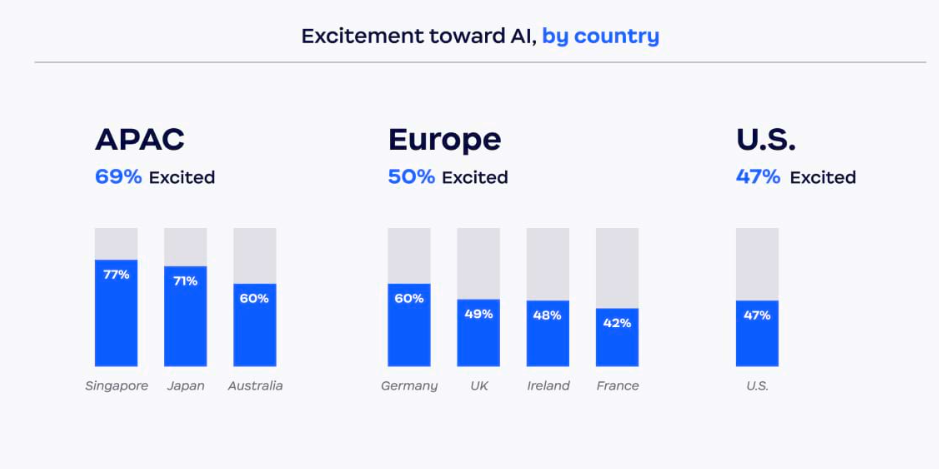
Global sentiment is shifting too: favorability and excitement toward AI capabilities are rising across all regions, with companies now expecting ODCs to power automation, data engineering, and AI-driven product development. This trend redefines location evaluations: beyond talent pools, it’s about AI readiness for next-gen initiatives.
Some business situations make offshore development centers especially useful. The examples below show when companies typically choose this model to expand their engineering capacity.
Startups often reach a stage where product demand grows faster than their internal engineering capacity can keep up. An offshore development unit helps them expand the team by accessing larger talent pools. Many startups begin with a small offshore team and gradually scale it as the product evolves.
Large companies often launch digital transformation initiatives to modernize legacy systems, move infrastructure to the cloud, or build new digital products. An offshore development hub helps enterprises expand engineering capacity to support these initiatives. Meanwhile, it continues system maintenance and daily business operations.
Product companies often expand their research and development capacity as their platforms grow and new features are introduced. An offshore development office allows them to assemble dedicated tech teams that contribute to ongoing product development. This division also explores new technologies and works on new product modules without overloading internal teams.
Building an offshore development division requires more than contracting developers in offshore countries. Companies often need a reliable partner who understands the local talent market, recruitment processes, and how to manage distributed teams.
Mobilunity helps companies build dedicated offshore teams by handling local recruitment, employment, and operational support. With established hiring processes and knowledge of local talent markets, we support companies in launching and gradually scaling offshore development centers.