IT Recruitment in Latvia: A Complete Guide for Tech Companies

A strong technical ecosystem, government support, predictable business conditions, EU and NATO membership, stable infrastructure, and a high-quality pool of talented engineers all make Lithuania one of the most attractive locations if you’re looking to hire developers in Eastern Europe.
Lithuania is not just a cheaper market. It’s a strategic destination where you can find competitive costs without sacrificing quality, stability, accessibility, and innovation. This guide provides a concise overview of Lithuania’s tech ecosystem, business environment, and IT talent landscape.
Lithuania didn’t become an IT recruitment magnet by accident. What’s happening in the country right now is the result of years of smart decisions: investing in digital skills, joining the EU, and building a tech-savvy economy.
Here are some numbers from Invest Lithuania to prove it:
Though Vilnius and Kaunas lead the scene, other cities across the country are turning into vibrant hubs for software development, fintech, cybersecurity, AI, SaaS, and data engineering.
Lithuania has already produced several unicorns. You may have heard of Vinted or Nord Security. And the country continues attracting global players that want reliable engineering power in the EU.
With accelerators, incubators, and modern R&D centers popping up everywhere, the talent pipeline here just keeps growing.
Here’s another big reason foreign companies choose hiring in Lithuania: the government genuinely pushes digital transformation. The country ranks 33rd in the Global Innovation Index 2025, and that’s not just a nice badge. It means Lithuania is steadily investing in technology, innovation, and education.
Businesses also enjoy a competitive 15% corporate tax rate, tax incentives for R&D projects, and support programs for smaller companies
On top of that, Lithuania funds reskilling and upskilling programs, making sure new specialists enter the market every year. That’s how the country keeps that double-digit annual growth in ICT talent.
Lithuania has built one of the most transparent and business-friendly regulatory environments in the European Union, aligned with data policies and strong IP protection requirements.
The EU and Schengen Area membership provide immediate advantages for international hiring, especially if you’re nearshoring Lithuania, such as
When companies hire from Lithuania, they may notice the same things right away: strong technical education, excellent English, and a very familiar work culture that feels close to Western Europe or the US.
That mix makes Lithuanian specialists a great fit for remote teams, outsourced development, product engineering, and long-term dedicated teams.
Lithuania puts a lot of focus on technical education, especially in Vilnius and Kaunas. Local universities are known for producing graduates with solid backgrounds in software engineering, cybersecurity, cloud and networks, data science, and mathematics.
And these aren’t just theoretical skills. Lithuanian engineers routinely work with distributed systems, enterprise SaaS, cloud platforms, and high-security fintech products. Dealing with complex architectures isn’t a rare occasion.
Lithuania’s tech market covers a wide spectrum of roles, such as software and mobile developers, DevOps/SRE, cloud, and data engineers, QA automation specialists, and product/project managers, with strong competencies in technologies like:
| Technologies | |
| Backend | Java, Kotlin, Python, .NET, Go |
| Frontend | React, Angular, Vue, TypeScript |
| DevOps | AWS, Azure, GCP, Kubernetes, Terraform |
| Mobile | Swift, Kotlin, Flutter |
| Data | Spark, Snowflake, BigQuery |
| QA Auto | Cypress, Selenium, Playwright |
Lithuania ranks #33 in the English Proficiency Index. Engineers routinely work with clients from the U.S., UK, Germany, and Scandinavia. Most documentation and communication are conducted in it, since cross-border teamwork is standard practice.
The work culture is guided by reliability, strong ownership, and accountability. Lithuanians are keen on punctuality. They prefer structured communication and well-defined processes with a balanced workload,
This makes collaboration smooth and predictable. Especially for companies that value transparency and long-term stability.
Looking to build a dedicated team or a flexible squad of contractors? Lithuania’s IT market has matured to the point where international companies can choose almost any hiring model. Let’s focus on these four: in-house hiring, using IT recruitment agencies, staff augmentation, and working with freelancers or part-time contractors.
Some companies decide to hire directly in Lithuania and build their own R&D team locally. This is especially common for tech brands opening offices in Vilnius or Kaunas.
Why? Because local developers really care about product impact, company culture, and long-term stability. So if a business positions itself as a serious and attractive employer, it can build loyal teams with low turnover. Since the work culture values responsibility and consistency, Lithuanian developers usually are in for the long ride.
A recruitment agency in Lithuania will know the local talent market inside out. They help companies hire faster, vet candidates, especially if you don’t have internal tech expertise. For international employers, agencies also act as guides, helping navigate local hiring rules, salary levels, and cultural expectations.
Most work on a success-fee model, have replacement guarantees, and know not just Lithuanian talent but also professionals across the Baltics.
This is one of the most popular models among international companies that want to hire developers in Lithuania. Instead of hiring directly, you “extend” your existing team with Lithuanian developers who work remotely but fully inside your workflows.
Staff augmentation and outstaffing agencies handle things like payroll, taxes, equipment, compliance, benefits, and legal details. You just get a team member and focus on delivery.
It’s a great option when you want to fill some skill gaps in your team and have predictable costs. It also works for when you need more flexibility in scaling up and down seasonally.
Lithuanian developers aren’t strangers to freelance work and project-based contracts. You can find specialists for MVP development, UI/UX improvements, QA automation, and so on. But, of course, while this model gives you workers fast, there’s a trade-off. Availability can vary, and top freelancers may not be available.
| Model | Best For | Key Advantages | Main Limitations | Commitment Level |
| In-House Hiring | Companies building long-term teams or local R&D centers | Full control, strong culture integration, high retention, deeper product ownership | Long hiring cycles and higher competition for senior talent. Requires local legal setup | Long-term, high commitment |
| IT Recruitment Agencies | Companies needing precision hiring without internal recruiting capacity | Faster access to vetted candidates, local market expertise, and reduced hiring risk | One-time recruitment fees; depends on employer brand attractiveness | Long-term employment but low operational burden |
| IT Staff Augmentation / Outstaffing | Scaling engineering capacity quickly without opening a local entity | Flexible team scaling, predictable monthly costs, no HR or administration burden, easy onboarding | Limited cultural integration vs full in-house; long-term dependency on vendor | Medium-term commitment with high flexibility |
| Freelancers / Contractors | Short-term tasks, specialised projects, MVPs or temporary workload spikes | Maximum flexibility, no long-term obligations, fast engagement, niche expertise | Availability varies, long-term consistency not guaranteed, requires strong project management | Short-term, low commitment |
One of the reasons companies like hiring in Lithuania is that you get strong engineering talent at prices far below Western Europe or the US. Most software developers here cost under $100/hour, which is rare for the level of quality you get.
Here’s what the market currently looks like, according to Mamble:
That’s a solid sweet spot for teams that want proven expertise without Silicon Valley pricing.
Lithuania offers one of the best cost-to-quality ratios in Europe. Viewed across Europe, it’s more affordable than places like the Czech Republic or Hungary, and fairly close but still more affordable than Latvia, Poland, and Croatia.
Compared to the United States, senior developers in Lithuania often cost up to half as much, while delivering similar experience levels and modern engineering skills.
Hourly rates tell only part of the story. The true cost of a development team also depends on:
Working with a partner that already has a vetted network can massively reduce time-to-hire and make your team productive sooner.
Hiring in Lithuania is pretty straightforward. You get the benefits of a solid digital infrastructure, clear regulations, and a fast-growing tech workforce. Still, where to look makes a difference, so here are some of the core options.
Lithuania’s IT community is very connected and incredibly active. Developers hang out in meetups, hackathons, Discord channels, and university groups.
Where companies usually start:
Just keep in mind: the market is competitive, so clear job descriptions and transparent salary ranges will get you much better response rates.
If you don’t know the market deeply or don’t want to spend months sourcing candidates, a local recruitment partner can speed things up dramatically.
Such firms understand the local talent market, so they can provide guidance on salaries and expectations. Moreover, recruitment agencies often have networks of candidates they have interviewed previously, which can also speed up the process.
This makes them incredibly effective for companies entering Lithuania for the first time or hiring for niche roles.
Lithuania operates under EU rules, so the legal process is predictable, transparent, and low-risk. But the details depend on how you plan to hire:
| Hiring Model | Requirements |
| Full-time employees in-house | Local legal entity / Employer of RecordStandard EU labor laws |
| Staff augmentation / outstaffing / recruitment agency | A local partner to handle payroll, benefits, equipment, compliance, etc. |
| Freelancers | Standard EU framework for invoicingContract with defined IP ownership and an NDA |
Lithuania follows EU IP rules and critical data protection regulations, such as the GDPR. NDAs and agreements are commonly drafted in English and are straightforward for foreign companies to manage.
This makes outsourcing to Lithuania legally predictable, low-risk, and easy to work with long term.

At Mobilunity, we don’t just scroll through databases hoping to find a match. We use our own 3R model (Relationships, Recruitment, Retention), which basically means that we learn about your business, understand what success looks like for you, and then we source the right engineers.
So, at first, we get a feel for your tech stack, long-term goals, product vision, culture, and the kind of personalities that fit your team. This helps avoid “volume hiring” and instead focus on high-precision sourcing. And because Mobilunity provides technical recruitment and interviewing as a service, we access hard skills, not just the soft ones.
Our recruitment process usually delivers ready-to-start engineers in 3–6 weeks.
One of such examples is our partnership with Simplanova, a Microsoft Dynamics expert.
They needed a highly specific skill set: senior NAV / Business Central upgrade expertise. We found exactly that, strengthened their delivery capabilities, and helped them plan future team growth.
Across Lithuania, we’ve seen a consistent pattern:
Mobilunity makes recruitment smoother, faster, and more predictable for global companies. We do this through targeted sourcing, expert technical interviewing, structured hiring workflow, transparent communication, and full admin support.
We also offer different ways to work with Lithuanian developers:
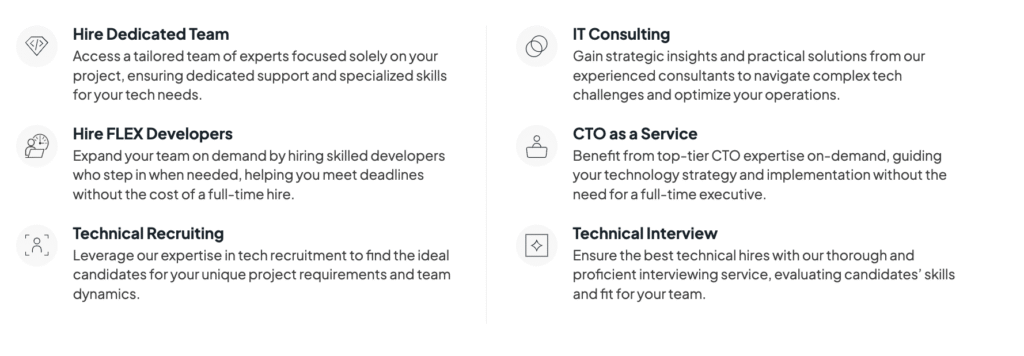
And while your new developer focuses on engineering, our HR and operations team handles payroll, contracts, benefits, performance tracking, onboarding, and day-to-day support.
No admin hassle, so you can focus on managing the team and getting quality products to the market.
In simple terms: Lithuania gives you the maturity of a top European tech hub, the efficiency of nearshoring, and the security of working inside the EU/NATO space. Lithuania offers a mix of quality, reliability, and competitive cost.
Developers here are known for strong English, modern engineering skills, and the ability to plug directly into international teams. Add the country’s impressive rankings in cybersecurity and innovation, and you get a favorable hiring destination.
If your goal is to build reliable engineering capacity in Europe without overspending or lowering your standards, Lithuania should definitely be on your shortlist. It’s especially suitable when you:

Disclaimer: All salaries and prices mentioned within the article are approximate numbers based on the research done by our in-house Marketing Research Team. Please use these numbers as a reference for comparison only. Feel free to use the contact form to inquire on the specific cost of the talent according to your vacancy requirements and chosen model of engagement.
Client Testimonial
Mobilunity provides an excellent and efficient tech talent service. All my staffing requests, even for niche technologies, were fulfilled in a 2 to 4-week time period, with top-notch candidates. Besides that, I like the caring environment that the Mobilunity team provides for the developers and ensures that everybody is able to work without distractions.
I strongly recommend Mobilunity as a tech talent partner!

Waldemar Biller
Head of Technology






Fulltime dedicated teams, FLEX on-demand model, consultancy, recruitment, EOR